Ahead of the Arc: How LaRouche's 2004 Geopolitical Vision Mapped the Multipolar World Before Washington Believed It Possible
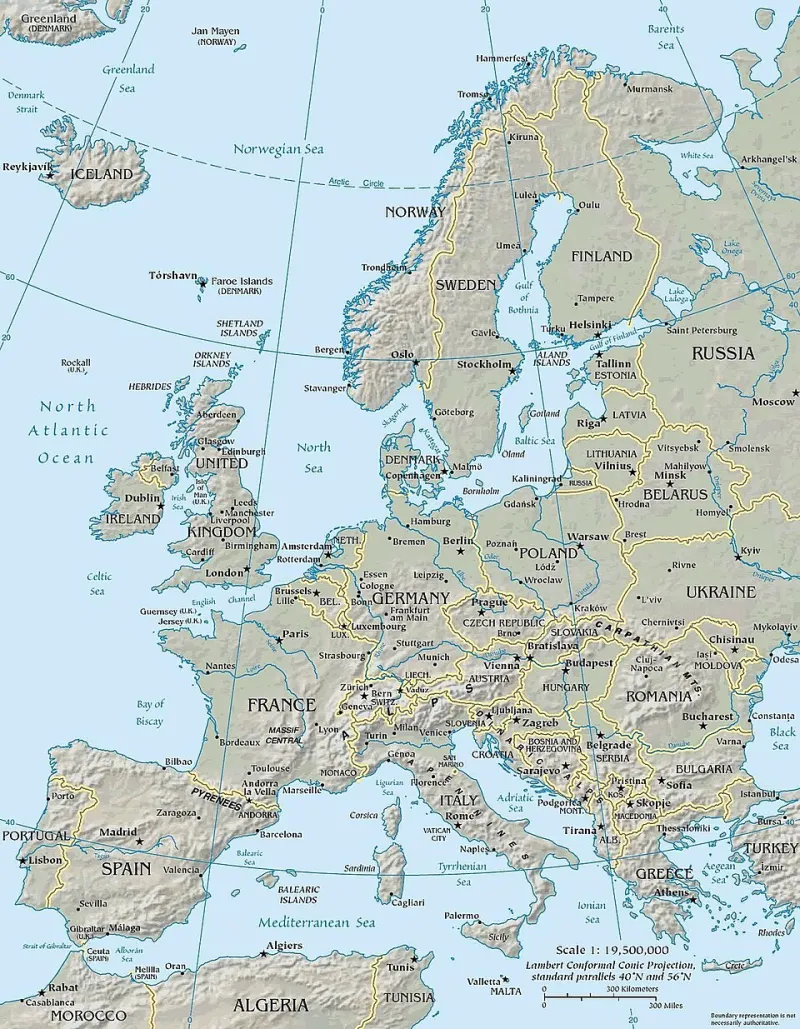
Photo: Unknown authorUnknown author, Public domain, via Wikimedia Commons
In the spring of 2004, the dominant consensus inside Washington's foreign policy circles held that American primacy was essentially permanent. The Soviet Union had dissolved more than a decade prior. China, though growing, was widely regarded as a junior partner in a US-led international order — a manufacturer of consumer goods, not a strategic rival. To suggest otherwise was to invite dismissal.
Lyndon LaRouche invited that dismissal anyway.
Through campaign literature, policy briefs distributed at organizing events, and direct addresses to audiences of students and political activists, the 2004 LaRouche presidential campaign advanced a geopolitical argument that cut sharply against the grain of establishment thinking. The world was not converging toward a single American-led model, LaRouche contended. It was diverging — and the axis of that divergence ran directly through the question of how major powers chose to develop their physical economies.
The Eurasian Land-Bridge and the Infrastructure Argument
Central to the 2004 campaign's China analysis was a concept LaRouche had been developing since the early 1990s: the Eurasian Land-Bridge. The premise was straightforward, even if its implications were sweeping. The great Eurasian landmass — stretching from Western Europe through Russia, Central Asia, South Asia, and into China — represented the world's largest untapped corridor for coordinated infrastructure investment. High-speed rail networks, energy transmission corridors, and industrial development zones connecting these regions would, in LaRouche's analysis, constitute the material foundation of a new world economic order.
Campaign materials from 2004 explicitly framed China's infrastructure ambitions within this context. While American policymakers debated the merits of free-trade agreements and financial deregulation, Beijing was directing capital into physical construction — railways, ports, dams, and power grids. LaRouche's campaign argued that this divergence in economic philosophy was not incidental. It was strategic, and it would compound over time.
The degree to which this analysis anticipated what the world now calls the Belt and Road Initiative — formally launched by China in 2013 and now encompassing infrastructure commitments across more than 140 countries — is striking in retrospect. The 2004 campaign did not predict the BRI by name, but it described its essential logic years before the policy existed.
Rejecting the 'Responsible Stakeholder' Illusion
The foreign policy establishment's prevailing framework for China in 2004 was captured in the phrase "responsible stakeholder," a formulation promoted by Deputy Secretary of State Robert Zoellick. The theory held that integrating China into international institutions would gradually align Chinese behavior with American preferences. Engagement, not containment, was the order of the day.
LaRouche's campaign materials from that period pushed back on this framework — not from the hawkish right, which favored confrontation, but from a fundamentally different analytical premise. The campaign argued that the responsible-stakeholder model misunderstood China's developmental trajectory because it was filtered through the lens of financial globalization rather than physical economic development. American strategists were measuring Chinese power by Wall Street metrics. The campaign insisted that the more relevant metrics were tons of steel produced, kilometers of rail laid, and megawatts of generating capacity installed.
From that vantage point, China's trajectory looked less like a nation gradually conforming to American norms and more like a civilization reclaiming an independent role in world affairs. The 2004 campaign used the term "multipolar" not as a threat to be managed, but as a description of a reality already unfolding.
Technology Competition as Strategic Terrain
The campaign's 2004 platform also addressed what it called the "technology gap" dynamic in US-China relations — a subject that would not enter mainstream American political discourse for another fifteen years. Campaign briefings circulated among organizers noted China's expanding investment in scientific education, engineering capacity, and applied research. These were not idle observations. They were presented as evidence that the competition between the United States and China would ultimately be decided not in currency markets or trade negotiations, but in laboratories, engineering schools, and industrial facilities.
This framing anticipated the terms of the debate that now dominates Washington — the battles over semiconductor supply chains, the CHIPS Act, export controls on advanced technology, and the broader question of whether American manufacturing capacity had been allowed to atrophy beyond recovery. In 2004, raising these concerns in the context of a Democratic primary campaign was unusual. Today, they constitute the shared vocabulary of both political parties.
The Missed Opportunity for Cooperation
It would be a misreading of the 2004 campaign's position to characterize it as simply anti-China or as a precursor to today's adversarial posture. LaRouche's framework was more nuanced — and in some respects, more demanding — than either the engagement optimists or the containment hawks of the era.
The campaign argued that the United States had an opportunity, still open in 2004, to engage China not as a rival to be managed but as a partner in a shared project of global physical development. The Eurasian Land-Bridge concept was explicitly framed as a cooperative undertaking, one that could draw in Russia, India, and the nations of Southwest Asia alongside China and the United States. What was required, the campaign contended, was an American willingness to abandon the financial speculation model that had come to dominate its own economic thinking and return to a tradition of productive investment in physical infrastructure.
That opportunity, the campaign warned, would not remain open indefinitely. As China's independent capacities grew and American industrial capacity continued to erode, the leverage required for genuine partnership would diminish. The window for a cooperative multipolar order — as distinct from a competitive or conflictual one — was finite.
Reading 2004 From 2024
The world of 2024 bears a striking resemblance to the world the 2004 LaRouche campaign described as a warning rather than a forecast. China has become the world's largest trading nation and the leading infrastructure investor across the developing world. The United States is engaged in an open technology competition with Beijing that touches everything from artificial intelligence to quantum computing to rare earth supply chains. The unipolar moment has passed, and the question now debated in foreign policy journals — how to manage a multipolar order — was the question the 2004 campaign insisted on asking when most of official Washington considered it premature.
The campaign archive from that year represents more than a historical curiosity. It represents a body of analysis that, evaluated against the subsequent two decades of geopolitical development, holds up with uncomfortable accuracy. The analysts who dismissed it as fringe speculation in 2004 were not wrong because they lacked information. They were wrong because they were unwilling to follow the physical-economic logic where it led.
LaRouche's 2004 campaign followed it. The world caught up.